Drain CleaningSouth Central PA
A drain rarely fails all at once. It slows, it gurgles, it leaves a ring in the tub, and then one morning the water simply stays. Drain cleaning in this corridor is mostly a story of old pipe meeting modern habits: cast iron that has scaled rough inside over sixty years, clay joints outside the house with roots in them, and grease and wipes asked to travel through both.
Typically $145–$450
The work divides into two kinds. Single-fixture clogs, a kitchen sink, a bathroom basin, a tub, live close to the fixture and clear with a small machine or a trap cleaning. Main line clogs announce themselves in several rooms at once and need a full-size machine run from a cleanout, sometimes with a camera behind it to see why the line keeps misbehaving.
Across South Central Pennsylvania, drain cleaning typically costs $145–$450 depending on which kind you have and how far the machine has to travel. The range is stated on your call once you describe the symptoms, and the symptoms genuinely tell most of the story.
Which clog do you actually have?
One fixture, standing water
A single sink or tub that drains slowly or not at all, while everything else in the house behaves, is a local clog: hair and soap in a bathroom, grease and food in a kitchen. These are the quickest and cheapest calls on this page.
The toilet talks to the tub
Flush and the tub gurgles; run the washer and the toilet bubbles. Fixtures commenting on each other means the problem is downstream of all of them, in the main line or its vent, not in any single drain.
Water at the floor drain
Any water, especially dirty water, appearing at the basement floor drain is the main line introducing itself. Stop running water and treat it as urgent; the next load of laundry is coming up through that drain.
The clog that keeps a schedule
A line that clogs every few months in the same season is telling you something structural: roots growing back, a sagging section holding water, scale narrowing an old iron pipe. Clearing it again without looking is renting the same problem.
Smells that come and go
Sewer odor in a basement or bathroom that appears with weather changes can mean a dry trap, a cracked vent, or waste sitting in a line that no longer slopes properly. Odor is a symptom worth diagnosing, not masking.
Fruit flies that will not leave
A stubborn cloud of drain flies around one sink usually means organic buildup inside that drain or a small crack feeding them. Cleaning the line properly, not spraying, ends the colony at its food source.
How a drain gets properly cleared
Step 1
Read the symptoms first
The visit starts with questions and a run of the fixtures: which drains are slow, which are fine, where the cleanouts are. That map decides whether the small machine or the main line machine comes off the truck, and guessing wrong wastes your money.
Step 2
Open the right access
Traps come apart for fixture clogs; cleanouts are used for the main line. Working from a proper cleanout protects your fixtures and gives the cable a straight run. In older corridor homes the cleanout is sometimes buried or missing, and fitting one becomes part of the job.
Step 3
Machine the line, feel the clog
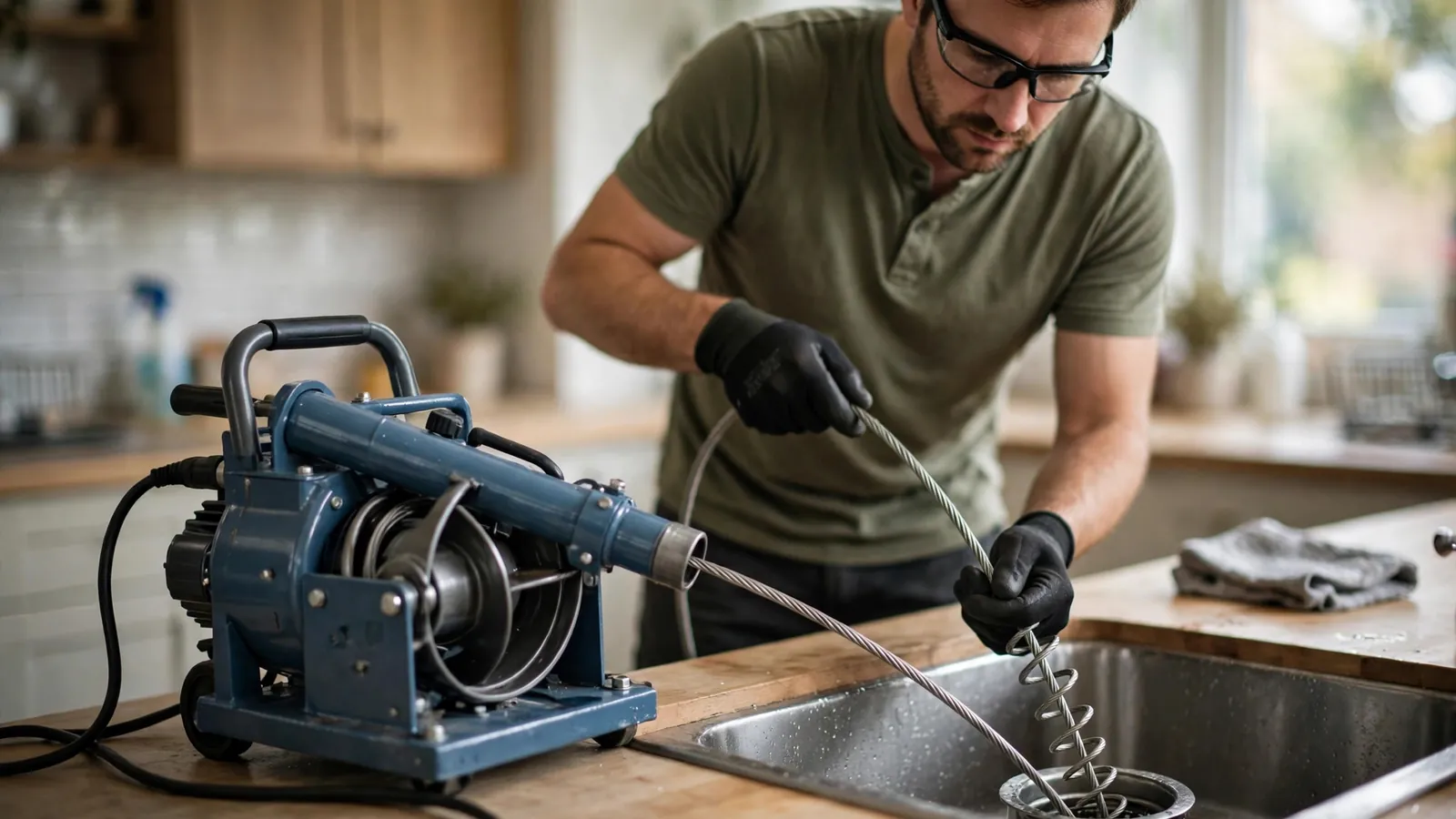
A rotating cable with the correct head cuts grease, hair, scale or roots and, just as importantly, reports back through the operator's hands. A soft blockage, a hard offset joint and a root mass all feel different, and that feel shapes the advice you get.
Step 4
Flush, test, and look if needed
The line is flushed and every affected fixture is run hard to prove the fix. If the clog felt structural, or this is the second visit for the same line, a camera inspection is offered so the next decision is made with pictures, not suspicions.
What drain cleaning costs around here
A single-fixture clog in this corridor typically costs $145–$250: a bathroom basin cleared of hair and soap, a kitchen sink freed of grease, a tub draining the way it should. Main line cleaning runs $250–$450, because the machine is bigger, the run is longer, and the cleanout work takes time.
What moves the price inside the range: a cleanout that cannot be found or has to be fitted, a line so packed the cable passes several times, and roots dense enough to need cutting heads changed mid-job. What never moves it: a bottle of chemical opener poured in first. Tell the plumber if you used one, because it sits in the trap and burns, and it almost never cleared anything but the label's conscience.
Slow is a warning, sewage is an emergency
A slow drain gives you time, and using that time well means booking before the holiday weekend when the house fills with guests and the line finally refuses. Drains almost never clear themselves, and the clog you meet on a Tuesday afternoon is cheaper than the one you meet on Thanksgiving.
Sewage at a floor drain, or water rising in a tub when the toilet flushes, is different. Stop all water use, keep the basement off limits to kids and pets, and call it in as a main line problem. Every gallon the house uses from that point arrives in the basement.
Drain Cleaning in these towns
Drain Cleaning: questions homeowners ask
Why did my drain clog again three months after cleaning?
Because the cause survived the cleaning. Cables clear a path through roots and scale, but roots regrow into clay joints and scale keeps narrowing iron pipe. A repeat clog on the same line deserves a camera inspection; the fix might be a jetting, a section replacement, or a root treatment plan instead of another clearing.
Are chemical drain openers a good idea first?
They rarely open a real clog, they can damage older pipe and seals, and they leave a trap full of caustic liquid for the next person to meet. On PVC they soften joints; on old metal they accelerate corrosion. A plunger or a hand auger is a safer first try, and a machine is the honest second.
How long does drain cleaning take?
A single fixture usually clears within the hour, including setup and testing. A main line run takes one to two hours depending on the distance to the clog and what the cable finds. A camera inspection, when added, takes about half an hour more.
What is the difference between cleaning and jetting?
A cable cuts a path through the clog. A water jet scours the full pipe wall, stripping grease and scale the cable slides past, and is the better tool for restaurant-style grease and long flat runs. Your plumber will say which the line needs after the first pass; many lines need only the cable.
Can you clean a drain if my house has no cleanout?
Yes, though the route matters. Small fixtures can be reached through their own traps, and a main line can sometimes be reached by pulling a toilet. Fitting a proper cleanout during the visit is usually worth it: every future call gets faster and cheaper.