Water Line RepairSouth Central PA
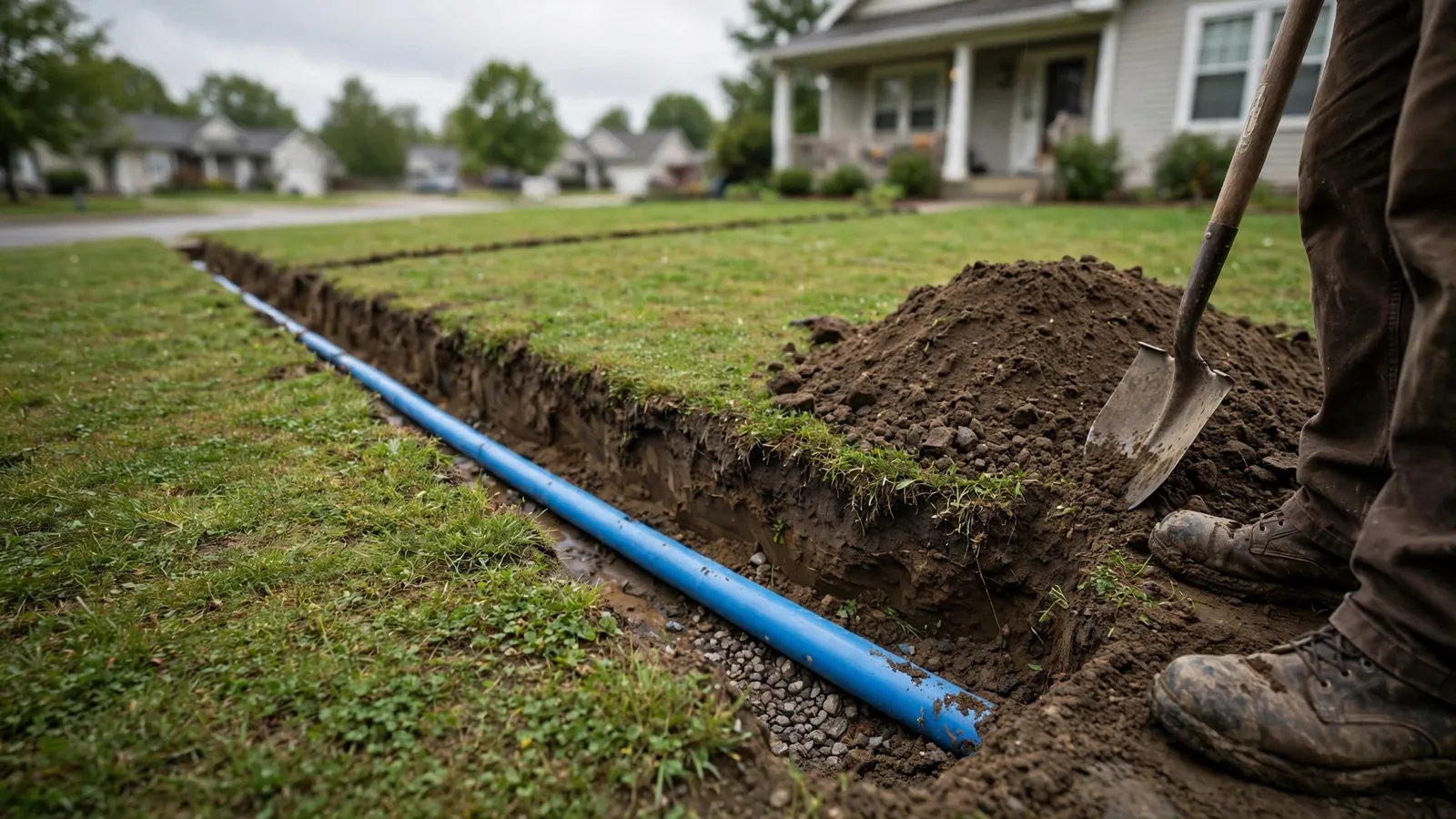
Every drop your house uses crosses one pipe: the service line running from the meter or curb stop to your foundation. When that line fails, the symptoms are house wide, low pressure everywhere, a meter that never rests, a yard that stays wet in a drought. Water line repair is the work of finding the failure in a buried pipe and fixing it with the least digging that honesty allows.
Typically $900–$3,800
The corridor's service lines are a museum of plumbing eras. Copper in the postwar suburbs, much of it now pitted by soil chemistry. Galvanized in the older boroughs, narrowing from inside with rust. Blue poly in newer construction, sound unless a fitting or a rock wins an argument. Each material fails in its own dialect, and the diagnosis starts by knowing which one your house speaks.
In South Central Pennsylvania, water line repair typically costs $900–$3,800 depending on whether the answer is a spot repair or a new line. The locating work comes first, because the cheapest trench is the one dug once, in the right place.
Signs the main line is in trouble
Pressure down across the whole house
One weak fixture is a fixture problem. Every tap tired at once, especially upstairs, points upstream: the service line, the meter, or the main shutoff. When the whole house sighs, think of the one pipe they all share.
A meter that will not sit still
With every tap closed, a moving meter means water leaving the system between the meter and your fixtures. If the house side tests tight, the loss is in the buried line, quietly watering the soil.
The green stripe in a dry month
A leaking service line irrigates its own path. In an August drought, the lawn over the line stays green while the rest of the yard goes straw. It is the leak drawing its own map for anyone who looks.
Soggy soil and sinking spots
Soil over a leaking line turns to soup and settles, leaving a soft trench line across the yard or a dip at the foundation. Near the house, escaping water can undermine walks and stoops as well.
Discolored water after quiet periods
A cracked line can draw soil in when pressure drops, then deliver it to your taps when demand returns. Brown water that clears, recurring after weekends away, belongs on the call as a symptom.
A bill climbing with no leak indoors
When leak detection inside the house comes back clean and usage still climbs, the service line is the remaining suspect. Hundreds of gallons a day can vanish underground without a sound or a puddle to show for it.
How a buried line gets found and fixed
Step 1
Prove where the loss is
The house is isolated at its main shutoff and the meter watched. If the dial stops, the leak is indoors and this page is the wrong one. If it keeps turning, the loss is between meter and foundation, and the search narrows to the yard.
Step 2
Locate the line and the leak
The line's path is traced from meter to house, then acoustic equipment listens along it for the hiss of escaping water. Soil moisture and the green stripe corroborate. The dig point is marked with evidence behind it, not optimism.
Step 3
Choose spot repair or replacement
A single failure in otherwise sound copper earns a spot repair: excavate, cut out, rejoin, test. A galvanized line at the end of its life, or a line with failures in two places, earns the replacement conversation, including trenchless options that pull a new line along the old path where conditions allow.
Step 4
Repair, test, restore
The work is pressure tested before the trench closes, the line is flushed until taps run clear, and the excavation is backfilled in lifts so it settles evenly. You are told what the replaced section was made of and what remains buried, for the next decision years from now.
Water line repair costs in this corridor
A spot repair on a located leak typically costs $900–$1,800 here: one excavation, a section of pipe, and restoration of a lawn. Full service line replacement runs $1,800–$3,800 for most corridor homes, varying with length, depth, and what the line passes under on its way to the street.
The honest variables are distance and obstacles. Thirty feet of open lawn is one job; sixty feet passing under a driveway, a sidewalk and a mature maple is another. Trenchless pulling, where the old line's path allows it, often lands in the middle: more than a spot repair, less than open trenching a difficult route, and kinder to the yard.
Underground leaks are patient and expensive
A service line leak rarely floods a house, so it rarely feels urgent. Run the numbers instead: a modest underground leak can pass 500 gallons a day, which is a water bill argument and, near a foundation, a soil erosion project. Weeks are acceptable; seasons are not.
Call it urgent when the line fails outright, the house loses water or pressure collapses, or the escaping water threatens the foundation, a neighbor's property or the street itself. A sinkhole appearing over the line's path also upgrades the call: voids underground do not announce their size politely.
Water Line Repair in these towns
Water Line Repair: questions homeowners ask
Who is responsible for the water line, me or the water company?
In most corridor systems, the utility owns the line from the main to the curb stop or meter, and the homeowner owns everything from there to the house. The exact boundary varies by provider, and a leaking line visit starts by establishing which side of it your leak sits on, because it decides whose bill the repair is.
How long does a water line replacement take?
Most residential replacements finish in one day: excavate or pull, lay the new line, test, connect and backfill. Longer runs, street crossings and permit inspections can stretch it to two. Water is usually off for hours, not days, and the schedule is explained before the first shovel.
What pipe material is used for a new service line?
Modern replacements here are typically copper or high density polyethylene, chosen for soil conditions, length and local code. Both carry long service lives. If your old line is galvanized or early poly with failing fittings, the new material conversation is part of the estimate, with the reasoning in plain terms.
Can a water line be replaced without digging up the whole yard?
Often. Trenchless methods pull or bore a new line along the old route with pits at each end, sparing driveways and landscaping. The method needs a workable path and suitable soil, and tight bends or collapsed sections can rule it out. The locating visit establishes whether your line is a candidate before anyone promises it.
Will my water bill be adjusted after a big underground leak?
Many local utilities grant a partial leak adjustment once, with proof of repair. Keep the invoice and any locating report; they are the documents the adjustment process asks for. It is worth the phone call: a month of underground leaking is a significant volume to be forgiven.