Leak DetectionSouth Central PA
Some leaks announce themselves. The expensive ones whisper: a water bill creeping up quarter after quarter, a warm spot on a floor, a meter dial that turns while every tap in the house is closed. Leak detection is the discipline of finding those leaks precisely, with listening equipment and thermal cameras, before the search itself does damage.
Typically $175–$550
The corridor is hard on hidden plumbing. Galvanized lines in pre-war homes corrode from the inside until a pinhole opens inside a wall. Copper under slabs in 1960s ranches pits where soil chemistry attacks it. Polybutylene and early PEX fittings in 1990s construction are reaching the age where joints weep. A leak the size of a pinhead can pass 400 gallons a day, quietly, into soil or framing.
Professional leak detection in South Central Pennsylvania typically costs $175–$550, and it earns its keep by shrinking the repair. The difference between opening one square foot of floor in the right place and trenching a yard on a hunch is the whole value of the visit.
Signs there is a leak you cannot see
The meter test fails
Close every tap, then watch the meter. If the dial or the low-flow indicator still moves, water is leaving the system somewhere. It is the simplest test in plumbing and the one that settles arguments.
A bill that rose without a reason
No new baby, no filled pool, no summer garden, yet usage is up 20 or 30 percent. Utilities in this region read accurately; when the numbers climb, believe them and go looking.
Warm or damp patches on floors
A hot water line leaking under a slab telegraphs itself as a warm tile. Cold lines make cool, damp spots and eventually mold along the baseboard. Either patch is the leak drawing you a map.
The sound of water in a quiet house
Hissing or faint running water heard at night, when nothing is open, is a classic sign. Pressurized lines talk. Stand in the quietest room, usually a bathroom at 1 a.m., and listen.
Cracks, settling and soft spots
Water escaping under a slab washes fines out of the soil, and floors respond: new cracks in tile, a door that suddenly sticks, a spongy place in laminate. The plumbing problem becomes a structural one if it runs long enough.
A yard that stays green in one stripe
A service line leaking between the meter and the house feeds a strip of lawn that stays lush through a dry August while the rest browns. Soggy soil over the line in a dry week says the same.
How a hidden leak gets found
Step 1
Isolate the system
First the leak is confirmed and bracketed: house side or yard side, hot or cold, by closing valves and watching the meter respond. Half of detection is ruling out the half of the plumbing that is innocent.
Step 2
Listen and look with instruments
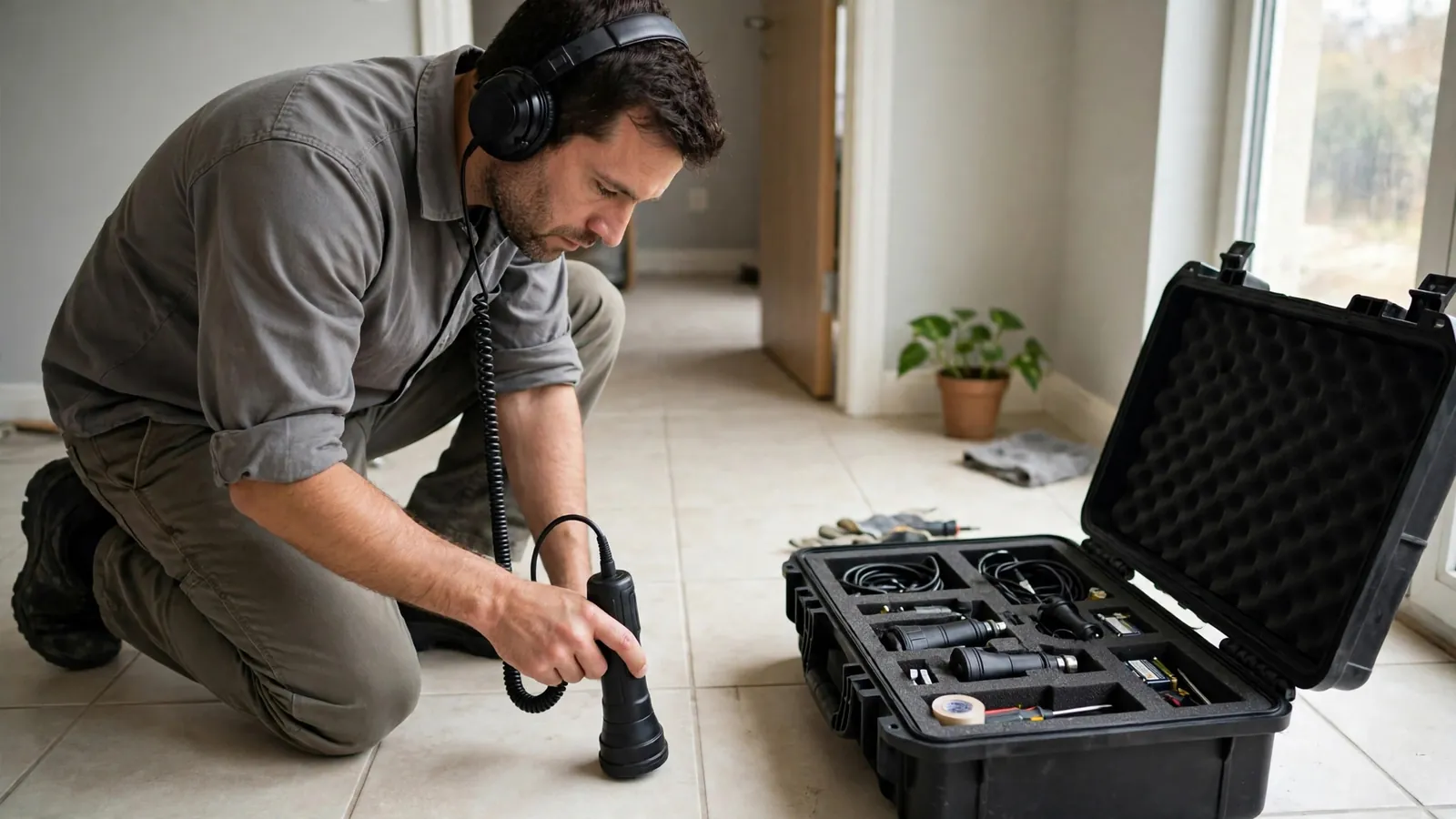
Acoustic sensors amplify the sound a pressurized leak makes underground or in a wall. Thermal cameras show the temperature signature of escaped water. Used together, they narrow a leak to a spot measured in inches, not rooms.
Step 3
Mark it, price the repair
Once the spot is marked, you see exactly where any opening would happen and hear the repair options with prices: spot repair, rerouting the line overhead, or replacing a failing run. The choice and the trade-offs are laid out before anything is cut.
Step 4
Repair and pressure test
If you go ahead, the repair is made through the smallest practical opening, the line is pressure tested to prove the system is tight, and the meter test is repeated so you can watch it pass.
What leak detection costs in this region
Detection itself typically runs $175–$550 in this corridor. A single suspected leak in an accessible house, where the meter test and one round of listening settle it, sits near the bottom. Multiple suspected leaks, a large property with a long service line, or a slab home needing several sensor placements takes longer and costs more.
Keep detection and repair as separate numbers in your head, because they are separate decisions. The detection fee buys certainty about location. The repair is then priced on facts: a spot repair through one floor tile is a different job from rerouting a line through an attic, and you will see both prices before choosing.
Hidden leaks do not heal
A hidden leak is never an emergency in the first hour and always an emergency across a season. Water inside a wall grows mold within days and rots framing across months. Under a slab it undermines the soil the house stands on. The right tempo is prompt, not panicked: book detection within the week you suspect it.
One exception. If the meter spins fast with everything closed and you cannot find where the water goes, close the main when the house is empty and overnight until the visit. A big underground leak can move astonishing volumes while you sleep.
Leak Detection in these towns
Leak Detection: questions homeowners ask
Can leak detection find a leak without digging or cutting?
In most cases, yes. Acoustic listening and thermal imaging locate the great majority of pressurized leaks through floors and walls. A small confirmation opening is sometimes needed before a repair, but it is made at the marked spot, not on a tour of the house.
My water bill doubled. Is it definitely a leak?
Not definitely, but it is the first suspect. Run the meter test: everything closed, then watch for movement. A running toilet is the most common innocent-looking cause and the meter test catches it too. If the dial moves with the house isolated from its toilets, the leak is in the lines.
Who pays for the water a hidden leak wasted?
Many corridor utilities, including several municipal authorities around Harrisburg and Lancaster, offer a once-in-a-while leak adjustment if you show proof of repair. Keep the detection report and the repair invoice; they are exactly the paperwork the adjustment desk asks for.
How long does a detection visit take?
Plan on one to three hours for a typical house. The variables are the size of the property, slab versus basement construction, and how cooperative the leak is about making noise. Stubborn leaks under deep slabs take the longest.
If the leak is under my slab, must the floor come up?
Not always. A spot repair through a small opening is one option; rerouting the line through walls or the attic abandons the buried section entirely and is often the smarter spend on older pipe. Both are priced for you once the location is known, and the decision is yours.