Sump Pump ServiceSouth Central PA
A sump pump lives a strange life: ignored in a dark pit for months, then asked to save the basement in a single night of spring rain. In the towns along the Susquehanna and its tributaries, that night comes most years. Snowmelt and a hard April rain raise groundwater under thousands of corridor homes at once, and the pumps that sat dry since October either answer or do not.
Typically $350–$950
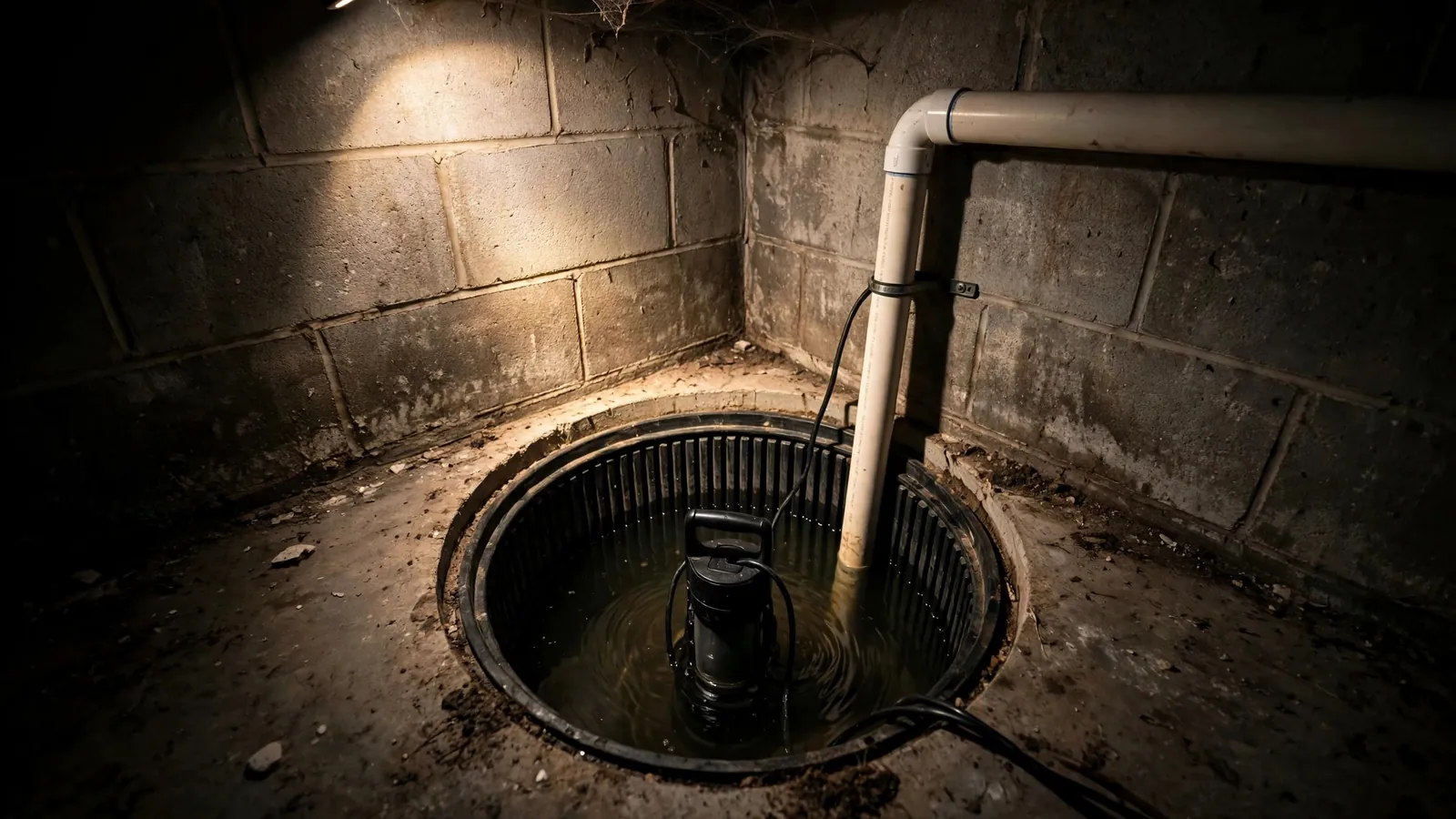
Sump pump service covers the whole small system: the pump itself, the float switch that tells it to run, the check valve that keeps discharged water from falling back, the pit, and increasingly a battery backup for the outage that so often arrives with the storm. Each piece fails in its own way, and the failure is usually discovered the way nobody wants, by water on the floor.
Across South Central Pennsylvania, sump pump replacement and service typically cost $350–$950, with backup systems at the upper end. It is insurance priced like a plumbing job, and it is cheapest in the calm weeks before the forecast turns.
Warnings from the pit
A pump that runs constantly
Cycling every few minutes in dry weather means groundwater pressure is high, the check valve has failed and water falls back, or the pump is undersized for the pit. Constant running wears a pump out years early and warns that it is working harder than it should.
A pump that never runs
Silence is not always safety. A float stuck against the pit wall, a switch corroded by years of damp, or a tripped outlet can leave a pump decorative. Every homeowner with a pit should hear their pump run a test cycle each season, poured in by the bucket if the weather will not oblige.
Strange noises from below
Grinding suggests the impeller is chewing debris; a loud clunk at shutoff is water hammer from a missing or failed check valve; a high whine is a motor on its way out. Pumps narrate their decline for those who listen once in a while.
Water that lingers in the pit
A pit that stays near full, or a basement floor damp at the edges after rain, says the system is keeping up only barely, or the discharge line is partly blocked or frozen. Barely is a warning grade, not a pass.
Rust, age and unknown birthdays
Most pumps last seven to ten years. If the unit in your pit came with the house and its age is a mystery, treat it as old. A pump's replacement cost is fixed and known; a flooded basement's cost is neither.
No backup and a history of outages
Storms that flood basements also drop power lines, which is why a primary pump alone is a single point of failure. Homes that lose power in bad weather, or sit empty for stretches, are the strongest candidates for a battery backup.
What sump pump service involves
Step 1
Test the whole system, not just the pump
The visit runs water through a full cycle: float travel checked, discharge timed, check valve listened to, pit inspected for debris and the silt that chokes intakes. Often the pump is fine and a ten dollar switch or valve is the criminal.
Step 2
Size the replacement honestly
If the pump itself is done, its replacement is sized to the pit and the water it actually moves, in horsepower and gallons per hour at your discharge height. Oversized pumps short cycle and die young; undersized ones lose storms. The old unit's performance in your pit is the guide.
Step 3
Fit pump, valve and discharge properly
The new pump sits level, the float swings free, a fresh check valve goes in at the right height, and the discharge is checked for leaks and freeze risk where it exits the house. A battery backup, when chosen, is installed with its own alarm so a silent failure cannot hide.
Step 4
Prove it under a hose
Before the visit ends, the pit is filled by hose and the system cycles repeatedly while you watch. You learn where the alarm is, how the backup behaves, and what the normal sound of your basement's insurance policy is.
Sump pump costs in the corridor
A like for like pump replacement, quality submersible unit fitted and tested, typically costs $350–$650 in this region. Adding a battery backup system with its alarm brings the job to the $650–$950 part of the range. Switch or check valve repairs on a sound pump cost less than either and are the happy outcome of many visits.
What the range buys is worth stating plainly. The average finished basement flood from a failed pump runs into five figures once flooring, drywall, cleanup and belongings are counted. Against that arithmetic, a pump replaced on schedule and a backup behind it is some of the cheapest money a corridor homeowner spends.
The time to call is before the forecast
Sump work has a calendar. The right moments are late winter, before the thaw, and any dry week when the pit can be opened and the system tested at leisure. The wrong moment is the second night of a storm, when every plumber in three counties is standing in someone else's basement.
If the pump fails mid storm with water rising, call it an emergency and say so. Buckets and a moved rug buy minutes; a battery backup, had it existed, would have bought the night. That sentence is worth remembering in the calm week after.
Sump Pump Service in these towns
Sump Pump Service: questions homeowners ask
How do I test my sump pump?
Lift the lid and pour in buckets of water until the float rises. The pump should start, empty the pit in a smooth run, and shut off cleanly without a bang. If it hums without pumping, runs without stopping, or never starts, it has told you what you needed to know in the cheapest possible way.
How long should a sump pump last?
Seven to ten years of typical service, less for pumps that cycle constantly in high groundwater, more for quality cast iron units in pits that stay dry most of the year. Age plus any change in sound or cycling pattern is a fair reason to replace on your schedule.
Is a battery backup worth it?
For houses that flood when the pump stops, yes, because the storms that raise groundwater also bring outages. A backup runs the pit for hours on battery and alarms when it takes over. Finished basements, homes left empty in winter, and anyone who has bailed once usually decide quickly.
Why does my pump run every few minutes all year?
Either your water table is genuinely high, common near the river and its creeks, or discharged water is returning through a failed check valve, or the pit is small for the inflow. The visit distinguishes the three: one is a fact of geography, the other two are fixable faults that are shortening the pump's life.
Where should sump water discharge?
Outside, away from the foundation, and not into the sanitary sewer, which most corridor municipalities prohibit. The discharge should land where it cannot run back to the house or freeze across a walkway. If yours pools against the wall it left, the line needs attention along with the pump.