24 Hour Emergency PlumberSouth Central PA
Plumbing emergencies keep their own hours. The pipe lets go at 2 a.m., the sewer backs up during Sunday dinner, the water heater splits while the house is empty for a weekend in the Poconos. This page is for those moments across South Central Pennsylvania: one number, answered by a person at any hour, with the typical cost of emergency work stated before anyone is sent to your door.
Typically $180–$750
An emergency, defined plainly, is water moving where it should not, sewage moving backward, or a house left without water entirely. Everything else, however annoying, can usually wait for a morning visit at morning prices, and the person who answers will tell you honestly which side of that line your problem sits on.
Emergency repairs in this corridor typically run $180–$750. The premium over daytime work is real and worth understanding: it buys a plumber out of bed, a stocked truck, and a repair made under pressure. What it should never buy is confusion about the price, so the range comes first on the call and the firm figure comes before tools come out at your house.
Call it an emergency when you see these
Water spreading and not stopping
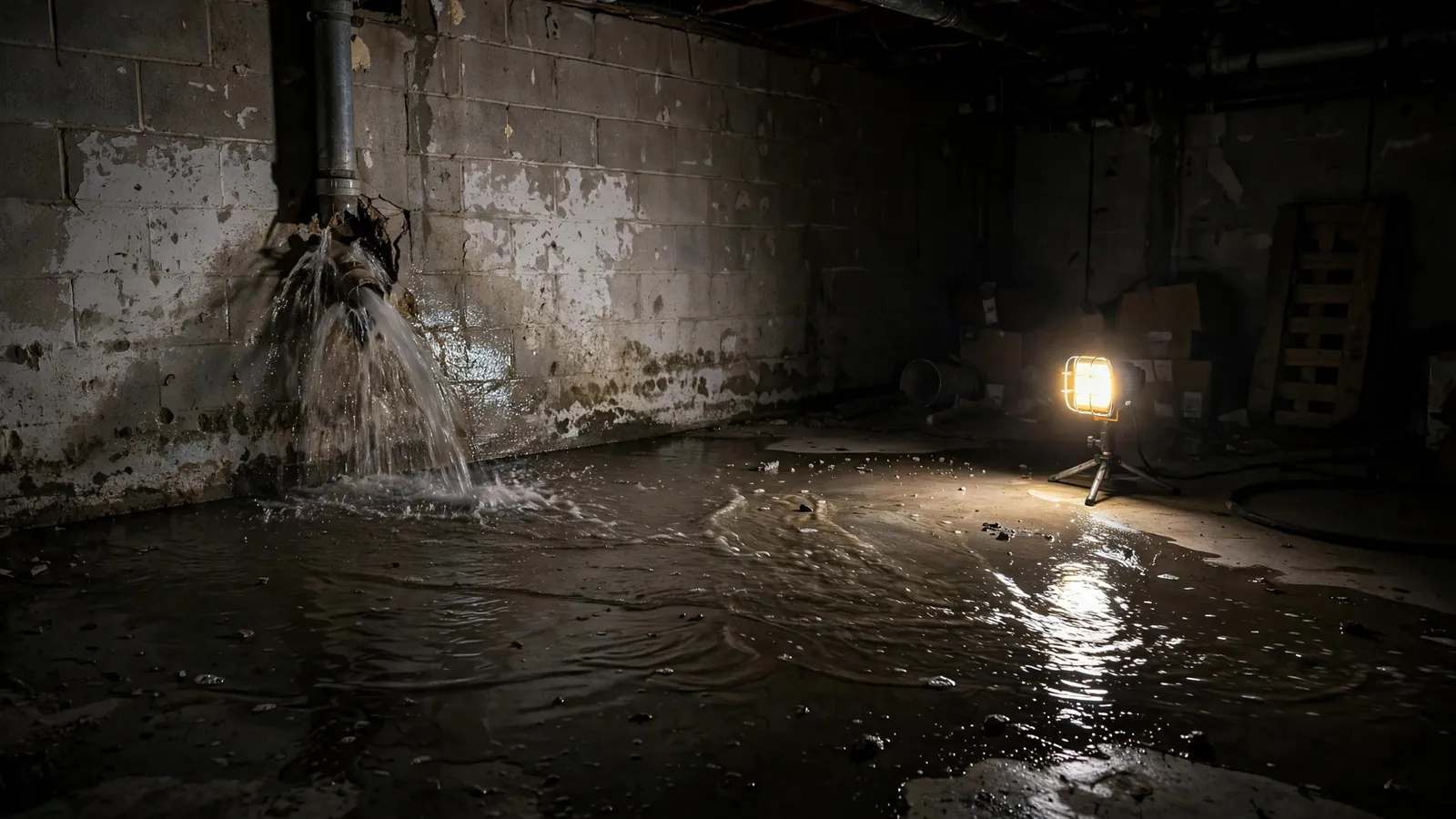
A burst supply line can pour hundreds of gallons an hour into a house. If closing the fixture valve does not stop it, close the main and call. Every minute of flow is flooring, drywall and belongings.
Sewage backing up
Water rising in a basement floor drain, a tub filling from below, or a toilet that brings company with it means the main line is blocked. Stop running water anywhere in the house and call; using fixtures makes the backup worse.
The smell of gas near an appliance
If you smell gas around a water heater, leave the house and call the gas utility or 911 first. Plumbing help comes after the utility clears the scene. No repair is worth guessing about gas.
No water in the whole house
A sudden total loss of water in winter often means a frozen main or a burst line between the meter and the house. In summer it can be a failed well component or a broken service line. Either way the house is unlivable until it is found.
A water heater leaking fast
A tank that goes from dripping to streaming is about to empty itself, 40 or 50 gallons at a time, onto whatever sits below it. Close the cold inlet on top, switch off the breaker or gas, and call.
A ceiling bowing with water
Paint bubbling is a warning; a ceiling that sags is a load of water looking for a way down. Stay out from under it, shut off the water above if you can, and treat it as the emergency it is.
How an emergency call unfolds
Step 1
You call, a person answers
At any hour, the call is picked up by someone who can dispatch, not a service that takes a message. First come the shutoff questions: where is the water, have you closed the main, is anyone standing in it near anything electrical.
Step 2
Stabilize over the phone
Many emergencies get smaller in the first five minutes. You will be talked to the main valve, the water heater shutoff or the meter key, whichever fits, so the damage stops growing while help is on the way.
Step 3
The range, then the dispatch
You hear the typical range for the repair before the visit is confirmed, including the after-hours premium, in plain numbers. If the problem can safely wait for morning at a lower cost, that option is offered honestly.
Step 4
Stop the damage, then fix the cause
On site, the first job is control: isolate the break, drain the line, protect the area. Then the repair itself, priced firmly before it starts, and tested under full pressure before the plumber leaves.
What emergency plumbing costs here
Emergency repairs across the corridor typically cost $180–$750. A straightforward after-hours fix, a split washing machine hose replaced, a burst section of copper cut out and rejoined, a main line cleared of a soft blockage, sits in the lower half. Work that needs walls opened, a sewer excavation assessment, or a water heater replaced on the spot moves toward the top.
Two honest notes about the range. First, the after-hours portion is a real cost everywhere in this trade, and any plumber who hides it in the small print is not doing you a favor. Second, the plumbing bill is usually the small part of an emergency. Water damage to floors, walls and stored belongings routinely costs several times the repair, which is why speed and a working shutoff matter more than shopping around at 2 a.m.
The first five minutes matter most
Before you call anyone, do three things if you can do them safely. Close the main water valve, usually where the line enters the basement or at the meter. Kill power to a leaking water heater at the breaker. Move what you can out of the water, starting with anything electrical and anything irreplaceable.
Then call, and keep the phone with you. The person who answers will ask where the water is coming from, whether it has stopped, and what floor it is on. Those answers decide what gets loaded and how fast. A calm description at 2 a.m. is worth more than a toolbox.
24 Hour Emergency Plumber in these towns
24 Hour Emergency Plumber: questions homeowners ask
How fast can an emergency plumber get to my town?
Response depends on where the on-call plumber is when you ring and what the roads are doing, so nobody honest promises a minute count. What is promised: a person answers immediately, the shutoff steps happen on that first call, and you are told plainly how long the wait looks from your town.
Should I call if I am not sure it is an emergency?
Yes. The call costs nothing and the triage is the point. A slow leak under a sink at midnight can usually wait for a morning visit at a lower price, and you will be told so. Water actively spreading cannot wait, and you will be told that too.
Why does emergency work cost more than a daytime visit?
You are paying for a plumber to be available at hours when the rest of the trade is asleep, and to carry enough stock to finish jobs without a supply house. The premium is stated inside the range on your call, before dispatch, so the choice is yours with open eyes.
What if the problem is my sewer line, not a pipe?
Sewer backups are treated as emergencies because sewage in a house is a health problem, not just a mess. Stop using water, keep people and pets out of the affected area, and say the word sewer on the call so the right equipment comes the first time.
Will insurance cover an emergency plumbing repair?
Policies usually cover the sudden water damage more readily than the plumbing repair itself, and every policy differs. Photograph the damage before cleanup, keep the invoice, and call your insurer once the water is stopped. The plumber's paperwork will describe the cause in the terms adjusters expect.