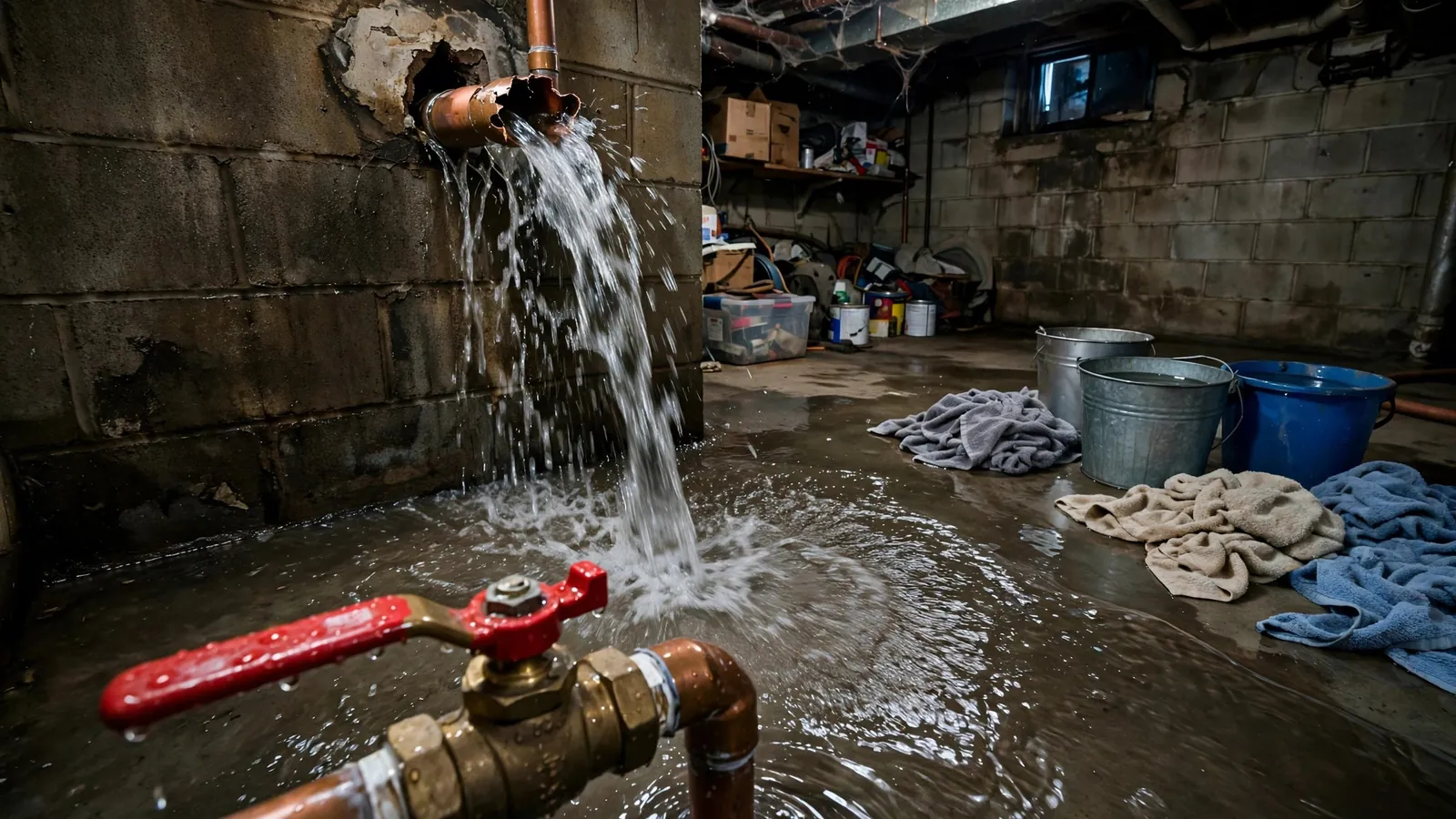
Minutes 0 to 5: stop the water
Nothing else matters until the flow stops. Go straight to the main shutoff valve. In most South Central Pennsylvania homes it sits where the water line enters the basement, on the wall facing the street, often near the meter. Turn a round gate valve clockwise; flip a lever ball valve a quarter turn. If the house valve fails or cannot be found, the curb stop at the meter can be closed with a meter key or wrench, and your water utility can also shut it from their side if you call.
If you do not know where your main valve is, this guide's first lesson is to learn it on a dry day. While you read this calmly, nothing is flooding. The day it floods, you will not want to be searching.
Minutes 5 to 15: make the scene safe and drain the lines
Water and electricity are the dangerous pair in any flood. If water is near outlets, the panel, or appliances, switch off the affected circuits at the breaker before wading in. Never stand in water that has reached anything plugged in. If a water heater is leaking or its area is flooded, cut its power at the breaker or shut its gas valve.
Next, open the lowest faucets in the house and let the lines drain. This empties the pipes above the break, stops the dripping from ceilings, and relieves pressure so a frozen section still holding ice does not split a second joint as it thaws. Flush toilets once to lower their tanks if the water will be off a while.
- Main valve first, always, before towels or buckets
- Breakers off where water meets anything electrical
- Water heater power or gas off if its area is wet
- Open low faucets to drain the system down
- Move what you can: rugs, boxes, electronics, documents
Minutes 15 to 30: call, and say the right things
Now call for the repair, and make the call count. State where the water is coming from as nearly as you can tell, whether the main is closed, which floor is affected, and whether the break followed a freeze. Those four facts decide what gets loaded onto the truck and whether the visit is treated as a contained repair or an active emergency.
Typical burst pipe repair in this region runs $180–$750 depending on the location and the number of splits. You should hear that range on the call. If the break followed a freeze, mention every tap that ran weakly or not at all, because freezes rarely split a pipe in only one place, and the plumber will want to pressure test the whole system before declaring it whole.
Minutes 30 to 60: protect the claim and the house
Photograph and video everything before cleanup moves it: the break, the standing water, the damaged belongings, the waterline on the walls. Insurers pay for sudden and accidental water damage far more readily than for the pipe repair itself, and your documentation is the claim's foundation. Keep the section of pipe that failed if the plumber removes it; adjusters like evidence.
Then get air moving. Open windows if the weather allows, run fans toward the wet areas, and pull baseboard covers where water went behind walls if you can do it without damage. Mold begins within a day or two in a closed wet wall, and the drying you start in the first hour is worth more than the drying a restoration crew starts on day three. For a serious flood, a water mitigation company is a legitimate second call; your insurer can confirm coverage while the plumber works.
The day after: what a good repair includes
A burst pipe visit is not finished when the spraying stops. The full job includes a pressure test of the whole system, an inspection of the rest of the frozen or failed run, and a conversation about why that spot failed: an uninsulated outside wall, a crawl space vent left open, a line run where it never belonged. Fixing the cause is the difference between a repair and a subscription.
If the break was a freeze, ask for the freeze proofing list for your house specifically: which pipes sit in cold zones, which cabinets to open on cold nights, which hose bibbs to drain each fall. An hour of prevention in October is the cheapest entry in this entire guide.