Water Heater RepairSouth Central PA
The water heater is the appliance a house can least do without and the one most likely to be ignored until it quits. In this corridor the quitting usually has a local accent: Lancaster County water runs hard, sediment settles in tanks by the bucket over the years, and a heater that should last twelve years is rumbling and lukewarm by year eight.
Typically $220–$650
Repair is the right answer more often than the sales pitch suggests. Heating elements burn out, thermostats drift, pilot assemblies clog, pressure relief valves weep, and every one of those is a part, not a new appliance. Replacement becomes the honest answer when the tank itself leaks, when rust colors the hot water, or when age and repair history say the next failure is already scheduled.
Water heater repair across South Central Pennsylvania typically costs $220–$650. A full replacement, sized and vented correctly, runs $1,200–$3,200. This page explains how to tell which conversation you are in before anyone arrives.
Symptoms and what they usually mean
No hot water at all
On an electric unit, a failed element or tripped high limit is the usual story. On gas, check whether the pilot is lit before assuming the worst. Total loss with a lit pilot and power present points at controls, all repairable parts.
Lukewarm or running out fast
A tank that used to serve two showers and now serves one has lost capacity, often to sediment insulating the bottom, or a failed lower element doing half the work. This is the classic hard water symptom in this region and it gets worse gradually enough to be mistaken for normal.
Rumbling, popping and kettle sounds
That is sediment again: water trapped under a mineral layer flashing to steam. The noise is annoying; the real cost is efficiency and tank life, because the burner or element must heat rock before it heats water.
Rusty hot water only
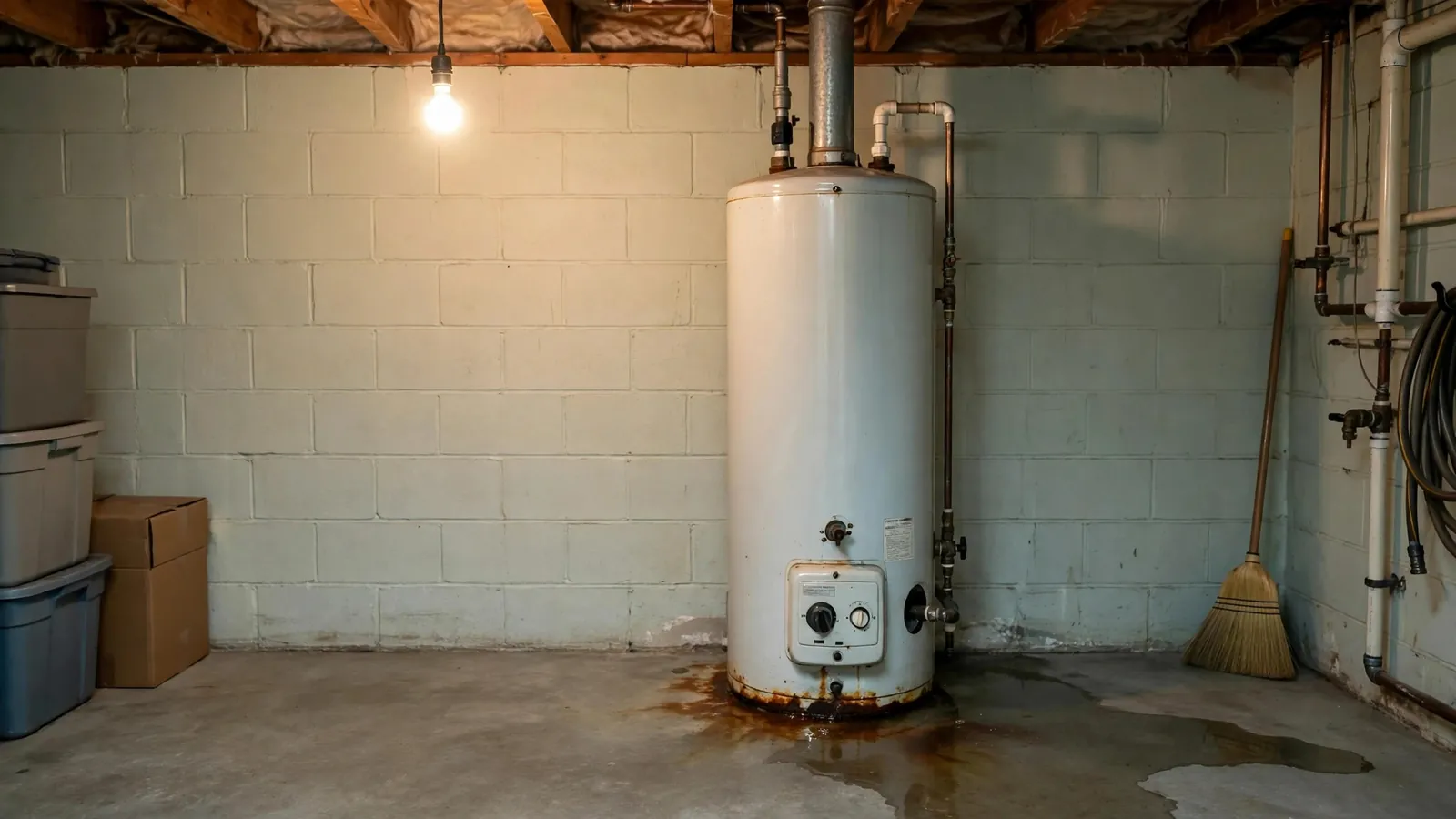
Brown water from the hot taps while the cold runs clear means corrosion inside the tank or a spent anode rod. The anode is replaceable; a tank rusting through is not. The age of the unit decides which conversation follows.
Water around the base
Distinguish a weeping fitting or relief valve, both fixable, from a tank seam letting go, which is not. A slow drip from the temperature and pressure valve can also be a warning of excess pressure elsewhere in the system, worth diagnosing rather than just replacing the valve.
A pilot that will not stay lit
Thermocouples wear out and are cheap. A pilot that lights and dies when the burner fires can also mean a clogged vent or a failing gas valve. Gas work belongs to a licensed tech; do not keep relighting a unit that keeps quitting.
How a water heater visit goes
Step 1
Age, model and symptoms first
The call and the visit both start with the data plate: brand, capacity, fuel and the year, which the serial number encodes. A seven year old heater with a dead element gets a repair conversation. A fifteen year old with a leaking seam gets a replacement conversation, and you will hear why in plain terms.
Step 2
Test the components
Elements and thermostats are metered, gas valves and thermocouples checked, the anode inspected where accessible, and the tank sounded and examined for the rust that matters. Diagnosis separates the part that failed from the system that caused it.
Step 3
Repair or replace, priced both ways
Where the choice is real, you see both numbers: the repair with its likely remaining life, and the replacement with its. The plumber's recommendation comes with reasoning you can repeat to a spouse without notes.
Step 4
Flush and set up for the next decade
After a repair, the tank is flushed of sediment and the temperature set to a safe, efficient level. After a replacement, the new unit is sized to the house, vented to code, and the anode and flushing schedule explained, because hard water here rewards a little maintenance.
Repair versus replacement money in this corridor
Repairs typically run $220–$650: elements and thermostats at the low end, gas valves, control boards and anode plus flush combinations toward the top. These prices buy years when the tank is sound, which is most heaters under ten years old with a single failed part.
Replacement runs $1,200–$3,200 depending on capacity, fuel, venting changes and where the unit sits. A like for like swap in an open basement is the low end; moving a unit, upsizing for a growing family, correcting venting or converting between fuel types costs more. The rule of thumb used honestly in the trade: if a repair approaches half the cost of replacement on a heater past ten years, replacement usually wins.
Cold showers can wait a day; leaking tanks cannot
No hot water is miserable and not dangerous; it can take a next day slot at normal prices. A leaking tank is the exception: close the cold water inlet on top of the unit, cut the power or gas, and call it in, because a seam that drips today can open tonight and empty the tank onto the floor.
One more true emergency sign: a temperature and pressure relief valve discharging repeatedly, or water too hot at every tap with the thermostat untouched. Both mean the controls are failing at their safety job. Turn the unit off and treat the call as urgent.
Water Heater Repair in these towns
Water Heater Repair: questions homeowners ask
How long should a water heater last in Lancaster County water?
Eight to twelve years is the honest local range, with hard water pulling toward the low end for tanks that are never flushed. An anode rod replaced around year five or six, and a yearly drain of a few gallons to clear sediment, are the two habits that push a heater toward the top of its range.
Is it worth repairing a ten year old water heater?
Sometimes. A single inexpensive part on a tank that shows no rust and heats evenly can buy two or three more years cheaply. Rust in the hot water, a leaking seam, or a second major repair in a year all argue for replacement. The visit prices both so the decision uses your numbers, not a slogan.
Why does my hot water run out faster than it used to?
Usually sediment or a failed lower element. Sediment insulates the water from the burner, and a dead lower element leaves the top of the tank doing all the work, so the usable hot water shrinks. Both are diagnosable in minutes and the first is fixable with a flush when the tank is otherwise sound.
What size water heater does my house need?
For most corridor families, a 40 or 50 gallon tank covers the morning rush; homes with soaking tubs, several teenagers or a large primary shower lean to 50 or a high recovery model. Sizing follows the biggest hour of demand, not the number of bathrooms, and the installer will walk through your household's actual peak before recommending.
Can I replace a water heater with a tankless unit?
Often, and the conversion is priced as its own job: gas line capacity, venting and water treatment all factor in, especially with hard water, which tankless units tolerate poorly without a softener. Homeowners who love endless showers and have the infrastructure come out ahead; others find a quality tank the better spend. Both numbers can be put in front of you.