Leak DetectionLebanon, PA
In a Lebanon rowhouse, water crosses party walls, stacks serve two floors and a stain on your ceiling may belong to a pipe that is not yours. Detection here starts with that reality.
Typically $175–$550
Why Lebanon leaks hide so well
Attached housing scrambles the usual leak clues. Water from a supply line in one home travels along a shared joist and appears two rooms away, or in the neighbor's unit. A stack serving both floors of a twin leaks into the wall between them and shows at the baseboard of whichever side offers less resistance.
Lebanon adds its water to the puzzle: limestone hard, mineral heavy, and patient. It pits copper, stiffens seals, and leaves the white scale signature that tells a detection tech which fittings have been weeping longest. The scale is evidence, and in this city it is read like it.
How the source gets proven, not guessed
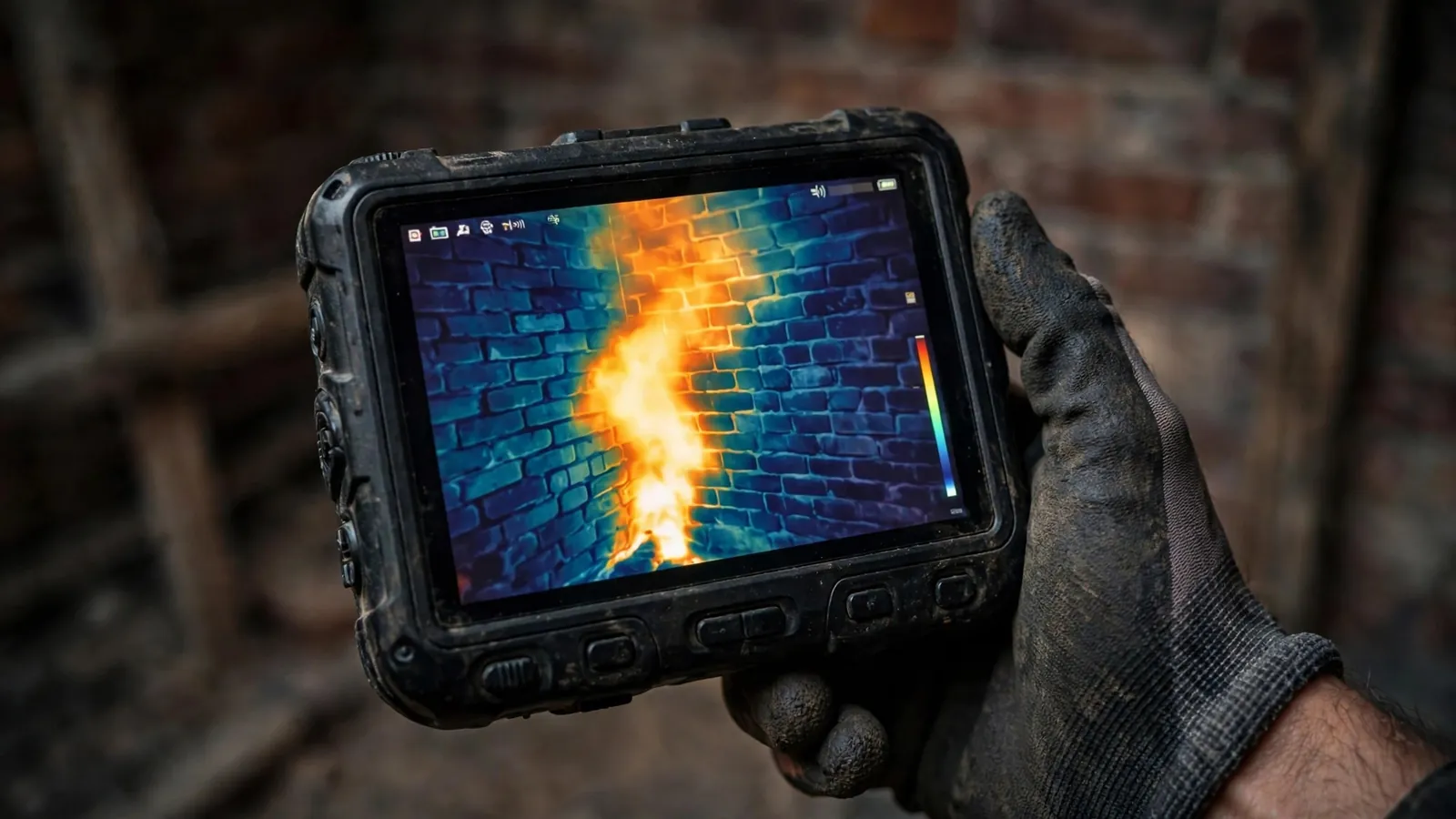
The visit isolates before it searches: your meter, your shutoffs, your fixtures, tested in sequence until the loss is assigned to a system, a floor, and if the building demands it, a side of the party wall. Acoustic listening then walks the line, and thermal imaging reads the walls and ceilings for the cool signature of escaped water.
The point of the rigor is the conversation with the neighbor, when it comes. A marked spot with instrument readings behind it settles whose pipe and whose repair a shared wall stain is, in a way a wet finger never will.
- Meter and isolation tests assign the leak to a system first
- Acoustic and thermal tools trace it through shared walls
- Findings documented for neighbor or landlord conversations
- Repair options priced once the spot is proven
What Lebanon homeowners do with the answer
Most detection visits end in one of three repairs: a section of pitted copper replaced through a small opening, a stack base rebuilt where a century of drainage collected, or a service line spot repair where the loss was under the yard all along. Each is priced on the facts the instruments produced.
Where the leak proves to be the neighbor's, the report is the deliverable: location, evidence and photographs that let two households and, if needed, two insurers divide the work without a feud. In a rowhouse city, that paper is worth as much as the wrench work.
ZIPs covered for leak detection in Lebanon: 17042, 17046.
Leak Detection in Lebanon: quick answers
How much does leak detection cost in Lebanon?
Most Lebanon detection visits run $175–$550. Attached homes with shared systems take longer to isolate and sit higher in the range; a single family home with a clear meter signal is quicker. The repair, once located, is priced separately on what the instruments found.
The stain is in my home but the leak might be my neighbor's. Who calls?
Whoever sees the damage can call; the isolation tests assign the source regardless of who booked the visit. If the pipe proves to be your neighbor's, the documented findings give you both a clean starting point for sharing the repair decision.
Can detection find a leak under a Lebanon rowhouse floor?
Yes. Acoustic sensors hear pressurized leaks through concrete and soil, and the search narrows to a marked spot before any floor is opened. Many rowhome leaks blamed on the slab turn out to be in walls or at the service entry, which the isolation sequence catches first.