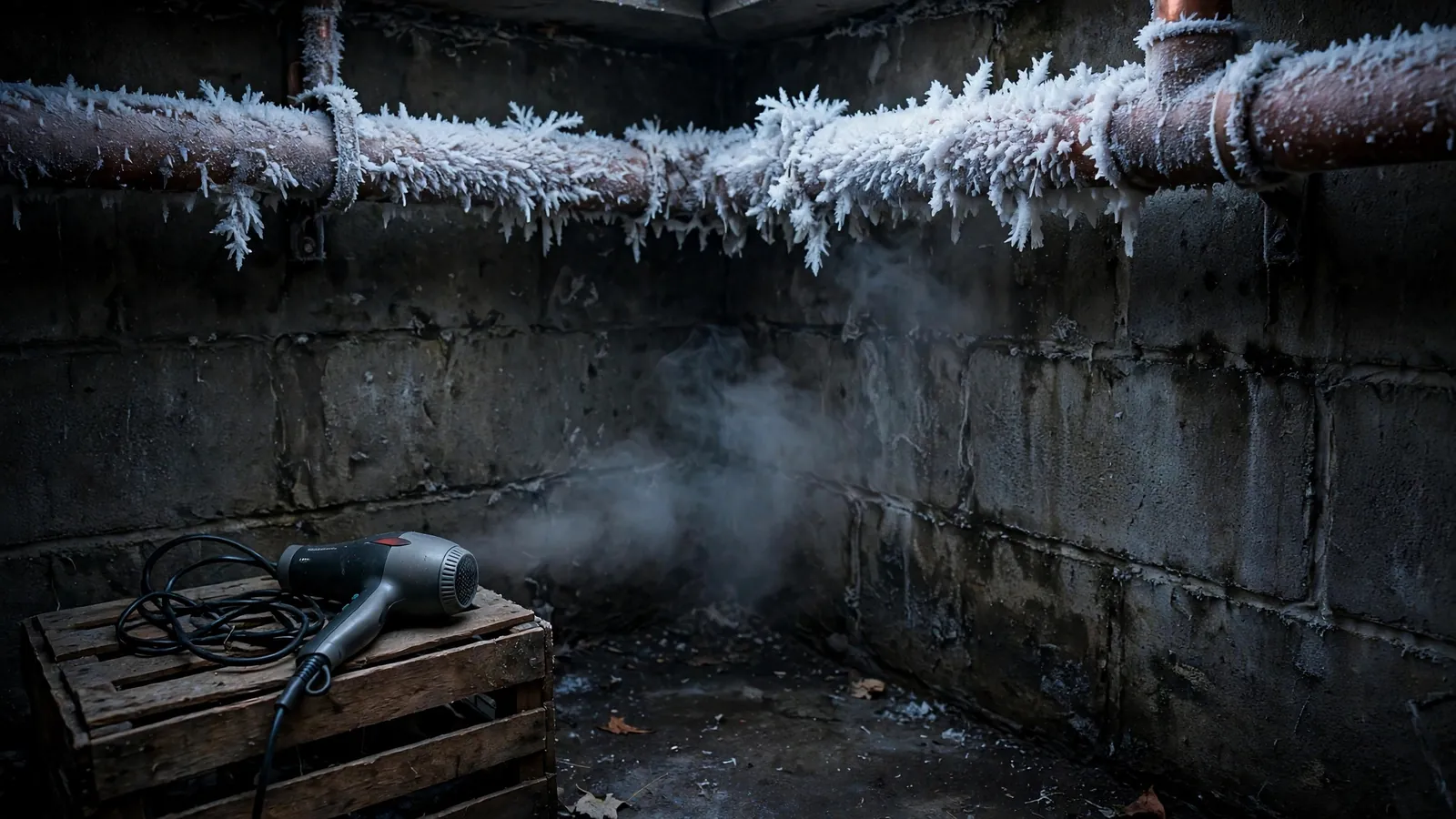
When Central PA pipes actually freeze
There is no magic temperature, because wind, insulation and exposure matter more than the reading on the porch thermometer. The working rule local plumbers use: risk climbs when temperatures hold in the teens or lower overnight, and uninsulated pipes in crawl spaces, garages and outside walls can freeze at higher temperatures when wind strips the building's warmth away.
The dangerous pattern is not the single cold night but the cold snap: two or three nights in the teens with days that never climb above freezing. The first night chills the pipe, the second freezes it, and the thaw on the third day is when the bursts announce themselves. Watch the forecast for duration, not just the low.
Prevention: the night before checklist
Prevention is a set of small, free actions done on the right evening. Open the cabinet doors under sinks on outside walls so warm room air reaches the pipes. Let vulnerable faucets drip a pencil thin stream; moving water resists freezing and the drip relieves pressure if ice does form. Keep the thermostat at its normal setting through the night, because a house allowed to cool to save fuel spends the savings on plumbing.
Close crawl space vents and foundation openings for the snap. Disconnect and drain garden hoses if fall somehow skipped them, and shut the inside valve to outside bibbs. Know where your main shutoff is before you need it at 3 a.m. in the dark, which is the single most valuable sentence in this guide.
- Cabinet doors open under sinks on outside walls
- A pencil thin drip at the most vulnerable faucets
- Thermostat held at normal settings overnight
- Crawl space vents and openings closed for the snap
- Hoses off, outside bibbs shut and drained
- Main shutoff located and tested while calm
Thawing: what works, and what burns houses
A frozen pipe with no leak yet is thawed gently, working from the faucet back toward the blockage so melting water always has an exit. Open the affected tap first. Apply heat with a hair dryer, a heat gun on its low setting kept moving, warm towels, or a space heater placed safely away from anything flammable and never left alone. Heat tape, installed before the season, is the professional version of the same idea.
Never use a torch, a propane heater, or any open flame on a pipe. Every winter, houses in this region burn from exactly that shortcut: framing dust, insulation and cobwebs ignite long before the pipe thaws, and insurance takes a dim view. Also never pour boiling water on a frozen pipe, which can burst it from thermal shock, and never chip at ice with tools.
The thaw is the dangerous hour
Counterintuitively, most freeze damage appears as the weather warms. Ice plugs a split pipe like a cork; the flood starts when the plug melts. On the morning after a hard freeze, walk the house: ceilings under bathrooms, walls behind outside fixtures, the basement below the kitchen. Listen for running water that no tap explains.
If flow returns weakly, or a tap that was dead runs and a wall starts to stain, close the main and call it in as a burst, typically $180–$750 to repair in this region depending on how many splits the freeze made. Mention every fixture that misbehaved; a proper visit pressure tests the whole system, because a freeze that broke one elbow often cracked another nearby.
After the season: fixing the spot that froze
A pipe that froze once lives in a place that freezes, and it will be tested again next January. The permanent answers, in ascending order of investment, are pipe insulation fitted properly, the air leak feeding the cold sealed at the rim joist or vent, heat tape on a thermostat for the stubborn run, and rerouting the line inside the warm part of the house for the spots that defeat everything else.
Keep a note of which pipes froze and where; give it to the plumber at any autumn visit. Freeze proofing done in October costs a fraction of the same conversation held in February with water on the floor, and it is the closest thing plumbing offers to a guarantee: not that winter will be kind, but that your house will be ready.